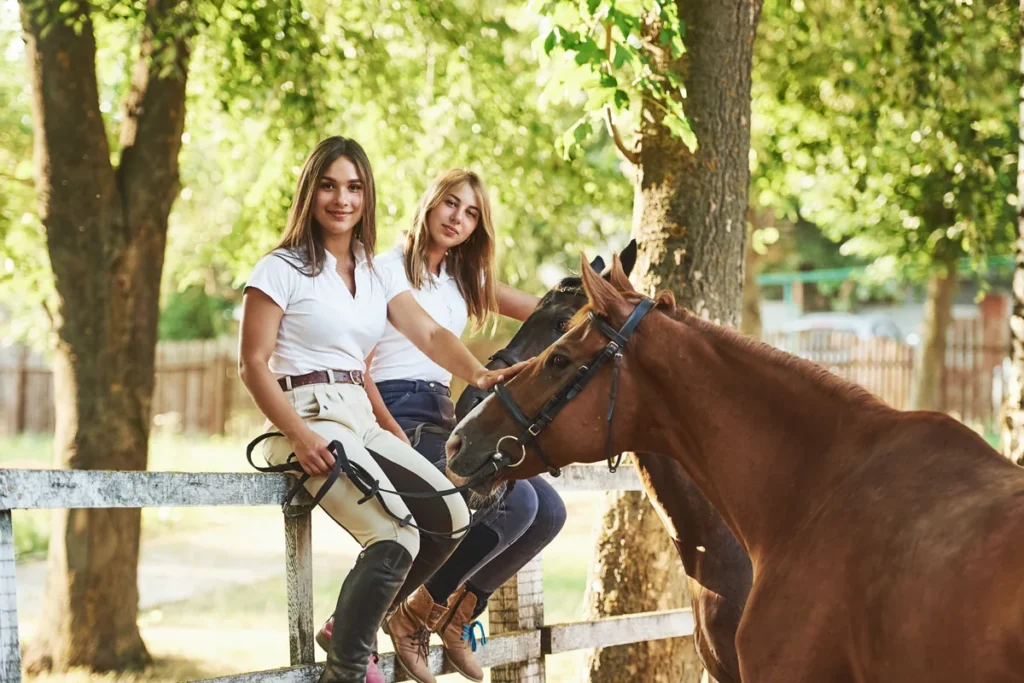
Maybe it’s a trail ride you booked on vacation. Maybe it’s your child’s first pony ride, a ranch excursion, or a first lesson at a local barn. Whatever brought you here, you’re probably staring at your closet right now wondering: does it actually matter what I wear?
It does. Not because horseback riding is a fashion sport, but because the right clothing keeps you more comfortable, helps your gear work the way it was designed to, and removes a few small but real risks. The wrong shoes, a loose scarf, or a borrowed bike helmet can create problems that a quick check beforehand would have prevented entirely.
This guide walks you through everything a beginner needs to know about what to wear horseback riding, from helmets and boots down to what to skip. Every safety-related claim here is drawn from organizations like the Certified Horsemanship Association (CHA), PATH International, Riders4Helmets, the United States Pony Clubs, the U.S. Equestrian Federation (USEF), ASTM International, and university extension programs.
One thing this guide cannot do is replace your provider’s rules. Clothing requirements vary by stable, ranch, trail outfitter, instructor, insurance policy, ride type, and weather. Before you arrive anywhere, call or email and ask what they want you to wear. This article gives you a solid foundation; your provider fills in the specifics.
Disclosure: This article contains affiliate links to activity booking platforms. If you book a ride through one of these links, LocalHorsebackRiding.com may earn a small commission at no additional cost to you. This does not influence which providers or activities are featured.
Why Your Horseback Riding Outfit Matters
Horses are large, powerful animals. Even well-trained, calm horses can shift suddenly or spook unexpectedly. Good riding clothes aren’t about looking the part. They’re about making sure nothing on your body becomes a hazard.
The Certified Horsemanship Association notes that safety apparel should be selected with fit and function in mind at every point, from helmet to footwear (Source: Certified Horsemanship Association, “Rider Safety Apparel from Head to Toe”). The University of Kentucky‘s Saddle Up Safely program, developed in partnership with UK HealthCare and the College of Agriculture, points out that many riding injuries are connected to preventable factors, and that simple choices like a properly fitted helmet and appropriate footwear are meaningful first steps (Source: University of Kentucky, Saddle Up Safely).
Mississippi State University Extension reinforces that the full picture includes long pants and hard-toed shoes or boots alongside the helmet, not just the helmet alone (Source: Mississippi State University Extension, “Safety Awareness in Mississippi 4-H Horse Programs”). So your outfit serves a real purpose. Think of it as reducing friction, literally and figuratively, so you can focus on the ride.
What to Wear Horseback Riding as a Beginner
Here is the short version that most lesson barns, trail outfitters, and riding programs will broadly agree on. The details vary by provider, so treat this as a starting checklist to confirm, not a universal rule.
- A properly fitted equestrian helmet, ASTM/SEI certified
- Long pants that stretch and fit well
- Closed-toe shoes or boots with a small heel and smooth or low-tread sole
- A comfortable shirt you can raise your arms in
- Layers that match the weather
- Light gloves, if you have them (optional for most first-timers)
- Hair tied back if it’s long
- Minimal jewelry and no loose accessories
That covers the core horseback riding outfit for beginners. Everything else in this article fills in the details.
Horseback Riding Helmet: What Beginners Should Know
The helmet is the single most important piece of beginner horseback riding gear, and it also has the most specific requirements. Not just any helmet will do.
The Certified Horsemanship Association recommends that all riders wear a helmet whenever they are mounted (Source: Certified Horsemanship Association). PATH International, which sets certification standards for therapeutic and adaptive riding programs across North America, requires riders in its certified activities to wear an appropriately fitted ASTM/SEI approved helmet (Source: PATH Intl. CTRI Candidate Handbook). The United States Pony Clubs requires properly fitted, securely fastened helmets meeting ASTM F1163-15 or F1163-23 with the SEI mark, or one of several accepted international equivalents, for all mounted activities (Source: USPC Policy 0810).
In the United States, the gold-standard equestrian helmet certification is ASTM F1163, developed specifically for horse sports by ASTM International. It tests impact absorption, harness retention, and performance against what is called an “equestrian hazard anvil” — a testing surface that mimics a horse’s hoof or a sharp rock (Source: ASTM International, F1163 Standard Specification for Protective Headgear Used in Horse Sports and Horseback Riding). The Safety Equipment Institute, known as SEI, independently certifies that helmet models actually pass that standard. That is why you will often see the label written together as ASTM/SEI. For competition riders, USEF Rule GR801 defines approved protective headgear as helmets meeting or exceeding ASTM/SEI standards with the harness secured and properly fitted (Source: U.S. Equestrian Federation, GR801).
Why a bike helmet is not the same thing
This comes up constantly because most families have a bike helmet sitting in the garage. According to Riders4Helmets, equestrian helmets are specifically engineered to cover more of the back and lower portion of the skull, which is where many horse-related head injuries occur. They also use a harder outer shell and are tested against the equestrian hazard anvil to simulate the force of a hoof or rock at height, which is different from the forward fall testing used for bicycle helmets (Source: Riders4Helmets, “Bike Helmets Are Not Suitable for Equestrian Sport”). The Bicycle Helmet Safety Institute also notes that equestrian and bicycle helmets are tested for different drop heights, surface types, and impact profiles (Source: BHSI / helmets.org, Helmets for Many Activities).
Don’t assume a bike helmet is acceptable. Ask your stable. Many provide loaner helmets for first-time riders, and a loaner equestrian helmet is always preferable to a personal bike helmet.
Fit and when to replace
A helmet only protects you if it fits. It should sit level on your head, snug and stable, with the chin strap fastened and adjusted so you cannot pull the helmet forward off your forehead. If you can, it’s too loose.
Two replacement rules come up consistently across equestrian safety organizations. First, replace any helmet after a fall, a drop, or a hard impact, even if you can’t see any damage, because internal foam damage is often invisible (Source: Certified Horsemanship Association; Riders4Helmets). Second, replace your helmet approximately every five years even without an incident, because foam and materials degrade from heat, sweat, and UV exposure over time (Source: Tipperary Equestrian, 5-Year Replacement Guideline; Riders4Helmets). If you’re borrowing a stable’s helmet, it’s fair to ask when it was last replaced and whether it’s been in a fall.
What Shoes to Wear Horseback Riding
This is where beginners most often make avoidable mistakes, and the reasoning behind the rule is worth understanding. The University of Kentucky’s Saddle Up Safely program explains it clearly: a small heel keeps your foot from sliding too far through the stirrup, and a smooth or low-tread sole allows your foot to release cleanly in a fall. If your foot gets stuck in a stirrup during a fall, you risk being dragged, which is one of the more serious hazards in riding (Source: University of Kentucky, Saddle Up Safely, “Footwear”).
Washington State University Extension’s 4-H attire guide puts it in plain technical terms: footwear must have an adequate heel stop to prevent the foot from sliding forward through the stirrup, and the sole must allow the foot to move freely and slide back out (Source: WSU Extension, 4-H Attire Recommendations). Penn State Extension‘s 4-H Cloverbud guidelines for young riders say simply that “a sturdy boot with a definite heel” is required for mounted activities (Source: Penn State Extension, Horse Cloverbud FAQ).
For most beginner rides, good footwear options include:
Paddock boots are short, lace-up or zip ankle boots designed for riding. They have a defined heel and smooth sole and work well for English-style lessons. Tall riding boots provide more coverage and are common in show environments and more advanced lessons. Western or cowboy boots have a classic riding heel and smooth leather sole, and they’re a natural fit for ranch rides and western lessons. Half chaps worn over paddock boots are worth knowing about, especially for English riding, since they protect the inner calf from stirrup leather friction without requiring a tall boot purchase. Some stables also permit sturdy closed-toe shoes with a small block heel for casual beginner trail rides, but you should confirm this before arriving.
What doesn’t work: sandals, flip-flops, water shoes, open-toe shoes of any kind, fashion boots with chunky or thick-treaded soles that can wedge in a stirrup, and slip-on sneakers that have no heel. Some stables allow sturdy lace-up sneakers with a defined heel for a first lesson, others do not. Always ask.
What Pants to Wear Horseback Riding
Long pants are the standard for good reasons. The saddle and stirrup leathers put constant pressure on your inner leg, and exposed skin chafes quickly. Pants also protect your legs from sun, brush, hay, and tack hardware (Source: Liberty University Campus Recreation, “What is the Equestrian Dress Code?”; Mississippi State University Extension).
Jeans are the most common choice for beginners, ranch rides, trail rides, and western lessons. A well-fitting pair that isn’t too stiff or too tight at the knee works fine. Riding tights and breeches are designed specifically for the saddle, often with grippy knee or seat panels, and they’re more comfortable on longer rides or English lessons. Thick athletic leggings can work if they’re opaque, not slippery, and your provider allows them. Thin yoga leggings slide on the saddle and offer little friction protection, so they’re not ideal.
Shorts are generally not a good choice. They leave your legs exposed to the friction of the saddle and stirrup leathers, and for trail rides, to sun and brush as well. Some very casual beach or ranch operations may not mind shorts on a short pony ride, but long pants are the safe default everywhere else. Baggy or wide-leg pants can ride up and catch on tack, and very restrictive stiff denim with a thick inner seam will dig into your knee on a longer ride.
What Shirt or Top Should You Wear?
The main thing to look for in a riding shirt is freedom of movement. You’ll be holding reins, adjusting your position, and sometimes raising your arms. A fitted T-shirt, polo, athletic top, or long-sleeve tee all work for most beginner rides.
Breathable fabric helps in warm weather. On trail and beach rides, a long-sleeve sun shirt with UPF protection is genuinely useful, since you’ll often be out longer and more exposed than you expect. Layers are smarter than one heavy top, since a base tee under a fleece under a vest lets you adjust easily rather than being stuck in a coat you can’t remove.
Loose, flowy, or dangling clothing is worth avoiding, and this matters more than it might seem. Long open scarves, flowing sleeves, and untucked drawstring cords can catch on the saddle horn, a fence, or a branch. The Certified Horsemanship Association’s safety apparel guidance emphasizes that rider clothing should not be at risk of catching on equipment (Source: Certified Horsemanship Association, “Rider Safety Apparel from Head to Toe”). Some lesson programs also require collared shirts or do not allow tank tops, and some 4-H events have specific dress codes, so check before you arrive (Source: WSU Extension, 4-H Attire).
What Not to Wear Horseback Riding
There’s a practical logic to every item on this list, so it’s worth understanding the “why” rather than just memorizing the list itself.
Open-toe footwear is the most common beginner mistake. Sandals, flip-flops, and open-toe shoes create an immediate stirrup-safety problem, and they offer no protection to your foot around a horse. High heels and chunky-soled fashion boots are the other side of the same coin: they either catch in the stirrup or don’t release cleanly. Shorts come with the chafing and skin-exposure problem described above. Loose, flowing dresses and skirts aren’t designed to straddle a saddle and can bunch unpredictably.
Long dangling scarves, necklaces, and oversized earrings all share the same hazard: they can catch on tack, the saddle horn, a low branch, or a fence. A tight choker necklace or small stud earrings are fine. Long, dangling, or hoop jewelry is not. Loose backpacks belong off the horse entirely; they swing around, can spook the animal, and unbalance you. If you need to carry something, ask the outfitter if a small belt pouch or saddle bag is available. Slippery athletic pants are a comfort and stability issue. And bulky, restrictive jackets that prevent you from raising or moving your arms freely make it harder to hold position and respond to the horse.
The underlying principle for all of these is a question worth asking about any item you’re considering: could this catch, snag, slide, or restrict? If yes, it’s probably better left at home.
Some providers have their own specific rules beyond what’s listed here. When in doubt, ask.
What to Wear for a Trail Ride
Guided trail rides are often more relaxed than formal lessons, but they tend to run longer and take you farther from the barn. If you’re looking for trail rides near me on a vacation or weekend trip, plan for the full duration of the ride and whatever the weather might do partway through.
A certified equestrian helmet is the starting point. Most reputable trail outfitters provide helmets, but ask when you book, because sizing varies. Jeans or riding tights paired with closed-toe boots with a heel are the standard pants-and-shoes combination. A long-sleeve shirt or sun shirt protects against sun and brush, even in summer. Pack a light jacket or tie one around your waist if there’s any chance of a temperature drop, since mountain trails and coastal trails especially can shift quickly.
Leave the loose backpack behind. Ask the outfitter if they provide saddlebags or if a small belt pouch is okay. Bring sunscreen and apply it before you mount, since reapplying on horseback is awkward.
What to Wear to Horseback Riding Lessons
For a first lesson, your instructor’s guidelines should take priority over everything in this article. If you’re searching for horseback riding lessons near me, the stable or school will often send a short welcome email with clothing requirements. If they don’t, send a quick message and ask.
A safe, provider-confirmed default for a first lesson includes a certified helmet, long stretchy pants, closed-toe boots or shoes with a heel, a fitted shirt with sleeves, and your hair tied back if it’s long. Some programs require a collared shirt or specific boot styles. English-focused barns may want paddock boots; western programs typically want cowboy boots. Gloves are optional for most beginners but can help with grip and comfort on longer rides.
Arrive a few minutes early. Meeting your instructor and your horse before you mount is worth the few extra minutes.
What to Wear Horseback Riding in Summer
Summer riding is absolutely doable, but heat affects both the horse and the rider, and most reputable stables monitor conditions and adjust their programs accordingly. If the weather is extreme, your provider may shorten, reschedule, or cancel a ride — and following their call is the right move.
For your part, dress to stay as cool as possible without giving up safety. A lightweight, breathable long-sleeve sun shirt in a light color can actually keep you cooler than a short-sleeve shirt in direct sun by blocking UV and reducing skin exposure. Thin riding tights or lightweight breeches are more comfortable than thick denim in heat. Closed-toe boots are still required by most providers, even on hot days. Your certified helmet is still required; plan around the heat by choosing a morning or late-afternoon ride when temperatures are lower, and hydrate well before you arrive.
If your outfitter allows you to carry water, bring it. If they don’t allow water on the trail, drink plenty beforehand and ask where the water stop is.
What to Wear Horseback Riding in Winter
Cold-weather riding is comfortable with the right layering strategy. The goal is to stay warm without putting on so much bulk that your arms and torso can’t move freely.
A thin moisture-wicking base layer goes on first, since it keeps sweat off your skin. A fleece or lightweight sweater adds warmth without restriction. A fitted insulated vest or riding jacket goes on top. The jacket matters: a long, puffy coat that prevents you from lifting your arms is more hindrance than help on horseback. Thermal breeches, fleece-lined riding tights, or thin long underwear under jeans handle the leg warmth. Insulated paddock or western boots with the usual small heel keep your feet warm while maintaining proper stirrup function. Thin riding gloves let you feel the reins while keeping your hands from going numb.
One common winter layering mistake is the long scarf. A neck gaiter is a better choice because it stays tucked in and can’t catch on anything. A thin beanie or ear warmer that fits under your helmet is fine if your helmet has the clearance; just confirm that it doesn’t prevent the helmet from sitting level and snug.
What to Wear Horseback Riding in Rain or Mud
The first thing to do in wet weather is contact your provider. Many stables and outfitters have weather policies that suspend rides when footing becomes unsafe, and that decision is entirely theirs to make. Following their lead isn’t just good etiquette — it’s the right safety call.
If the ride is still happening, a close-fitting waterproof riding jacket or rain shell is the foundation of a wet-weather outfit. Avoid ponchos. A poncho flaps in the wind, which can startle a horse, and it can catch on the saddle. Waterproof riding chaps or overpants protect your legs without adding much bulk. Boots that handle mud without becoming dangerously slick are important; most leather paddock and western boots offer some water resistance, and rubber-soled waterproof options exist specifically for outdoor riding. Riding gloves with a textured or rubberized grip are worth having, since wet leather reins are slippery.
Pack a dry change of clothes for after the ride. Even a light rain can leave you damp to the skin after an hour outside, and a dry layer waiting in the car makes the whole experience more pleasant.
What Kids Should Wear Horseback Riding
Parents booking a child’s first ride often have more questions than adult beginners do, especially around helmet sizing and what shoes count as acceptable. Here is a straightforward approach.
Penn State Extension’s 4-H Cloverbud program, designed for children ages 5 to 7, sets a clear bar: an ASTM/SEI helmet is required at all times around horses, and long pants plus sturdy boots with a definite heel are required for any mounted activity (Source: Penn State Extension, Horse Cloverbud FAQ). That framework is a good model for any child’s first ride.
Practically speaking, pack jeans, leggings, or comfortable long pants. Bring short cowboy boots, paddock boots, or sturdy closed-toe shoes with a small defined heel. Check with the stable about helmet sizing before you arrive, since children’s head sizes vary considerably and a properly fitted loaner is far better than bringing a helmet that doesn’t fit. Tie back long hair, and leave sandals, light-up shoes without a heel, and anything with long ribbons or a dangling cape at home. A change of clothes in the car is always a smart move. Barns are dusty, and children tend to make the most of that.
What to Wear for Different Types of Horseback Riding
Use this table as a starting point. Every provider has its own rules, so use the “What to Confirm” column as your pre-arrival checklist.
| Type of Ride | Suggested Clothing | What to Confirm with Provider |
|---|---|---|
| First riding lesson | ASTM/SEI helmet, long pants, paddock boots or shoes with a defined heel, fitted shirt with sleeves | Helmet loaners, footwear rules, specific dress code, lesson length |
| Guided trail ride | Certified helmet, jeans or riding tights, closed-toe boots with heel, sun shirt, light jacket | Helmet provided, weight limits, age limits, saddle bag availability |
| Ranch ride | Certified helmet (or hat where explicitly permitted), jeans, western boots, long-sleeve shirt | Helmet vs. hat policy, ride length, terrain, recommended layers |
| Beach ride | Certified helmet, lightweight long pants, closed-toe shoes or boots appropriate to sand and surf conditions — confirm with provider, as footwear policies on beach rides vary more than other ride types | Whether rubber-soled or water-resistant shoes are allowed; sandal policies; sun protection supplies |
| Pony ride (kids) | Properly fitted helmet, long pants, closed-toe shoes with small heel | Age, height, weight limits; whether a parent walks alongside; helmet sizing |
| Western riding | Certified helmet (or western hat where the provider explicitly allows), jeans, western boots with heel, long-sleeve shirt | Helmet requirement — many lesson programs require certified helmets even in western disciplines |
| English riding | ASTM/SEI helmet, breeches or riding tights, paddock boots (half chaps optional and often helpful) | Tall boot requirement for specific levels; glove and collar requirements |
| Therapeutic / adaptive riding | ASTM/SEI helmet required by PATH Intl. standards, comfortable long pants, supportive closed-toe footwear that meets program specifications | Specific PATH Intl. center policies on adaptive tack, helmet fit, footwear, volunteer assistance, and rider health documentation |
Beginner Horseback Riding Outfit Checklist
Must-have
Start here before anything else. Your stable or outfitter may supply some of these, but verify before assuming.
- ASTM/SEI certified equestrian helmet, your own or a properly fitted and recently replaced loaner
- Long pants that fit well and offer a little stretch
- Closed-toe footwear with a small defined heel and smooth or low-tread sole
- A comfortable shirt with sleeves you can raise freely
- Hair tie if your hair is longer than collar length
Nice-to-have
These items are not required by most beginner providers but will make your experience more comfortable.
- Light riding gloves or thin work gloves
- Half chaps (especially useful for English lessons with paddock boots)
- A packable vest or fleece layer
- Sunscreen applied before you arrive
- A small water bottle, if the provider allows it on the ride
- Lip balm
Ask the provider before you arrive
This short list of questions will prevent the most common surprises on arrival day.
- Do you supply helmets? What sizes do you have?
- Is there a footwear requirement beyond closed-toe and a heel?
- Are shorts or capris permitted on this ride? (Assume no unless confirmed otherwise.)
- Can I bring a water bottle or small bag?
- Are there age, height, or weight requirements I should know about?
- What is your policy if the weather changes before the ride?
- Is there a place to store a jacket or bag while I ride?
Common Beginner Mistakes to Avoid
The most common mistakes aren’t about not knowing the rules. They’re about assuming the rules don’t apply to you, or assuming that what you own is close enough to what’s required.
Showing up in sandals or flip-flops is the most frequent one. People arrive in summer vacation mode and forget that footwear has a direct safety function around horses. Right behind that is assuming a bike helmet is equivalent to an equestrian helmet. It isn’t, for the reasons covered in the helmet section above, and most reputable stables won’t accept one. Wearing shorts seems harmless until about fifteen minutes into a saddle ride when your inner legs start chafing from stirrup leather contact.
Bulky or loose clothing, especially long coats that restrict arm movement, makes it harder to ride and can flap in ways that unsettle a horse. Bringing a loose backpack on the ride is another common one, since it shifts your center of gravity and can distract the animal. Borrowing an old helmet that has been in a fall is a subtler risk but a real one, since you likely won’t know its history.
Finally, two easy-to-miss mistakes: wearing brand-new stiff jeans or uncomfortable shoes on the day of a ride, when there’s no chance to break them in, and not telling your instructor about a fear, physical limitation, or prior experience level before you mount. Your instructor can only set you up for success if they know what they’re working with.
How to Find Beginner-Friendly Horseback Riding Near You
If you’re searching for horseback riding near you, look for providers that explicitly welcome beginners and that have clear policies around helmets, footwear, and rider requirements. Helpful signals include CHA-certified instructors, PATH International-accredited centers for therapeutic and adaptive programs, and transparent waiver and safety policies on the website.
LocalHorsebackRiding.com is a free directory organized by state and city that lists horseback riding lessons, guided trail rides, ranches, stables, and equestrian centers across the United States. You can search by location, browse by ride type, and find contact information to call or email ahead with your clothing and safety questions. Always read the provider’s website and reviews, and confirm clothing and gear requirements directly with the stable before you arrive.
Conclusion
You don’t need a specialized wardrobe to enjoy your first ride. What you need is the right foundation: a properly fitted ASTM/SEI certified equestrian helmet, long pants that are comfortable, closed-toe footwear with a small heel and smooth sole, and weather-appropriate layers. Those four things, confirmed against your provider’s specific rules before you arrive, cover the essentials of what to wear horseback riding as a beginner.
Skip the sandals, the bike helmet, and the loose scarf. Tie back your hair. Pack a light layer even if it’s warm. And take five minutes before you book to ask your stable, ranch, or trail outfitter exactly what they want you to wear. The right clothes set you up to be more comfortable, more confident, and more focused on the experience itself.
Disclaimer: Horseback riding carries inherent risks. The clothing, helmet, footwear, and safety requirements described in this article are for general informational purposes only and do not apply equally to every stable, ranch, trail operator, or riding program. Rules vary by provider, ride type, terrain, weather, and individual rider. This article is not a substitute for guidance from a qualified riding instructor, stable, or outfitter. Always contact the horseback riding provider directly before your ride and follow all posted safety rules and staff instructions.
Frequently Asked Questions
What should a beginner wear horseback riding?
Start with the basics: a properly fitted ASTM/SEI certified equestrian helmet, long stretchy pants like jeans or riding tights, closed-toe shoes or boots with a small defined heel, and a comfortable shirt with sleeves. Tie your hair back, skip the dangling jewelry, and confirm any specific requirements directly with your stable or outfitter before you arrive.
What shoes should I wear horseback riding?
Look for closed-toe footwear with a small defined heel, usually around half an inch to one inch, and a smooth or low-tread sole. The heel stops your foot from sliding through the stirrup; the smooth sole lets your foot release cleanly if you fall. Paddock boots, western boots, and short cowboy boots are all solid choices. If you’re unsure whether a specific pair qualifies, send a photo to your stable and ask (Source: University of Kentucky, Saddle Up Safely, Footwear).
Can I wear sneakers horseback riding?
It depends on the stable. Some beginner-friendly providers allow sturdy lace-up sneakers with a defined heel for a first lesson; others require boots regardless. Slip-on sneakers and running shoes without a heel are almost never acceptable because they can slide through the stirrup. Don’t assume — ask your provider before you show up.
Can I wear jeans horseback riding?
Yes. Jeans are one of the most common choices for trail rides, ranch rides, and western lessons, and they work fine for most beginner English lessons too. Choose a pair that fits well at the knee and isn’t so stiff that it digs in. For longer rides, some people find breeches or riding tights with less inner-seam bulk more comfortable.
Can I wear leggings horseback riding?
Thick, opaque, grippy leggings can work on many beginner rides. Equestrian-specific riding tights are the best version of this idea, since they’re designed with the saddle in mind. Thin yoga leggings slide on the leather and provide almost no protection against chafing from stirrup leathers. Check with your provider first, since some programs require more structured pants.
Can I wear shorts horseback riding?
For most rides, no. Your bare inner leg is in constant contact with the saddle and stirrup leathers, and chafing happens quickly. Shorts also leave your legs exposed to sun and brush on trail rides. A very small number of casual operations may not mind on a short pony walk, but long pants are the safe default everywhere. Assume no unless your provider explicitly says otherwise.
Do I need a helmet for horseback riding?
Most reputable stables, trail outfitters, therapeutic riding centers, and youth programs require one. The Certified Horsemanship Association recommends a helmet whenever a rider is mounted, and PATH International and the United States Pony Clubs require certified helmets for all mounted activities. Many providers supply loaner helmets, especially for first-time riders, so ask when you book.
Can I wear a bike helmet horseback riding?
Equestrian helmets and bike helmets are certified to different standards for different types of falls. According to Riders4Helmets, equestrian helmets provide more rear skull coverage and are tested against a hazard anvil that simulates a hoof or rock impact, while bike helmets are optimized for forward falls at lower heights. Most stables will not accept a bike helmet in place of an ASTM F1163/SEI certified equestrian helmet (Source: Riders4Helmets; ASTM International). Use an equestrian helmet.
What should kids wear horseback riding?
The same basics apply at every age: a properly fitted ASTM/SEI certified helmet, long pants, and closed-toe shoes or boots with a defined heel. Penn State Extension’s 4-H Cloverbud guidelines for ages 5 to 7 list these same items as required for mounted activities (Source: Penn State Extension, Horse Cloverbud FAQ). Leave sandals, dress shoes without a heel, and anything with long flowing fabric at home. Confirm helmet sizing with the stable before you arrive.
What should I wear for a trail ride?
A certified equestrian helmet, jeans or riding tights, closed-toe boots with a heel, a sun-protective long-sleeve shirt, and a light jacket in case of weather are the core pieces. Check whether the outfitter provides helmets, ask about weight and age limits, and skip the loose backpack unless they specifically say it’s okay.
What should I wear to horseback riding lessons?
Ask your instructor first, since schools vary. A reliable default is a certified helmet, well-fitting long pants, paddock boots or closed-toe shoes with a heel, a fitted shirt you can move in, and your hair tied back. English programs may want breeches and paddock boots; western programs usually prefer jeans and cowboy boots. Half chaps are a practical and affordable option for English riders who don’t own tall boots.
What should I not wear horseback riding?
Sandals, flip-flops, and open-toe shoes are the top offenders for stirrup safety. Bike helmets, ski helmets, and baseball caps don’t provide equestrian-level protection. Shorts, loose scarves, dangling jewelry, flowy skirts or dresses, and loose swinging backpacks all create unnecessary hazards. Slippery athletic pants and overly restrictive jackets also make it harder to ride effectively.
Do I need special horseback riding clothes for my first ride?
Not necessarily. Most beginners can ride comfortably in jeans, a T-shirt, and boots or shoes with a small heel. The one item worth getting right from day one is the helmet. If your stable doesn’t supply one or doesn’t have your size, an entry-level ASTM/SEI certified helmet from a reputable tack shop is a worthwhile purchase. Have it fitted before you arrive.